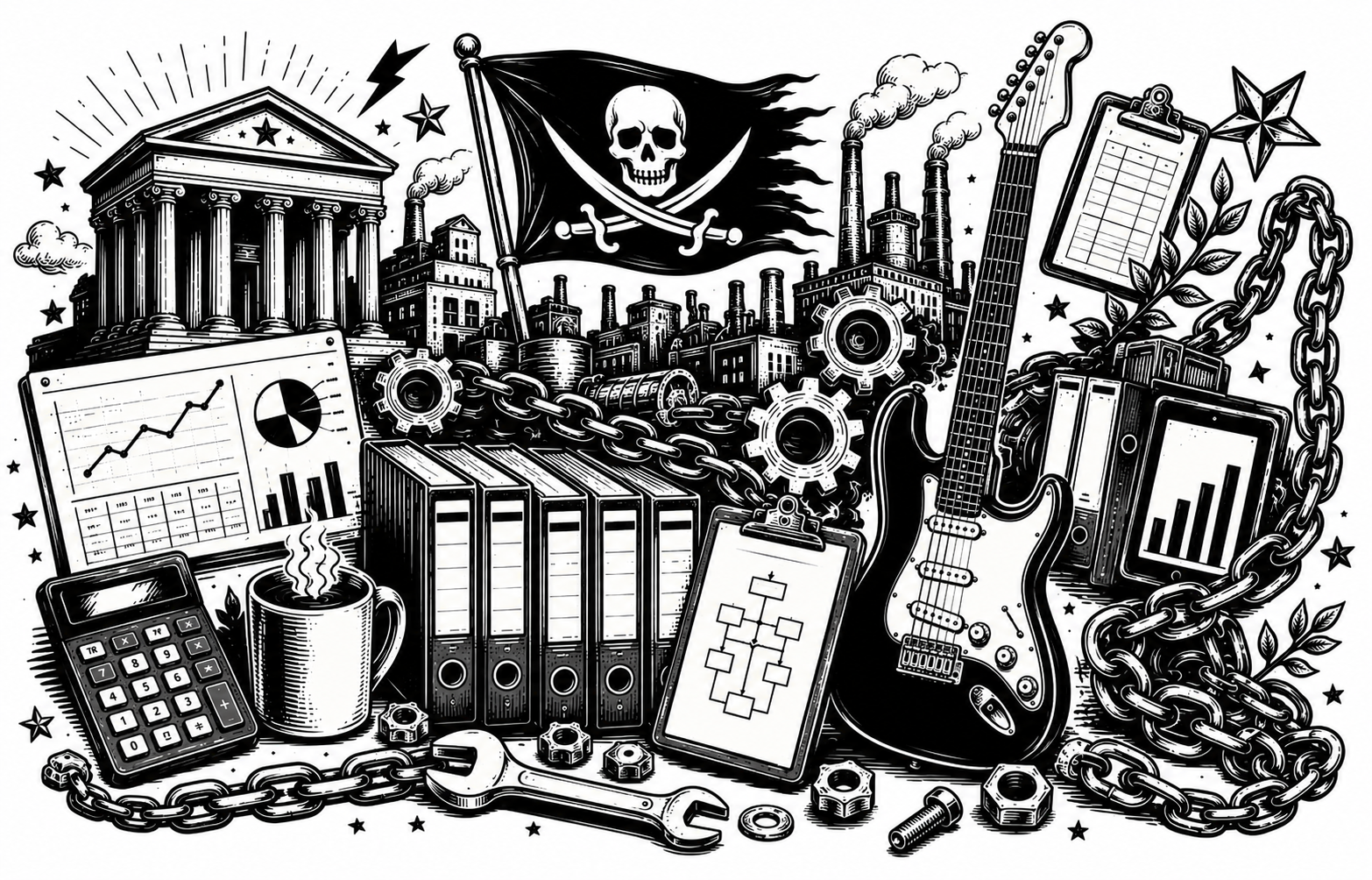
EurekaGO Brand Playbook
09
Character
System
System
The EurekaGO narrative character system — seven illustrated archetypes representing the emotional reality of modern data management, chaos, and governance.
The EurekaGO narrative character system — seven illustrated archetypes representing the emotional reality of modern data management, chaos, and governance.
EurekaGO's Narrative Character System is a set of seven illustrated archetypal figures that visualize the emotional reality of modern data management. These are not mascots. They are symbolic representations of operational behaviors — metaphors for governance, chaos, fragmentation, and structure that professionals working with catalogs, assets, and workflows recognize immediately.
The system intentionally rejects sterile SaaS branding, glossy tech aesthetics, and generic dashboard illustration. Instead, it embraces symbolic storytelling, operational realism, ironic self-awareness, and black humor — building a recognizable mythology around data governance and catalog orchestration.
Four characters embody the chaos state — fragmentation, overload, manual labour, and operational pain. They represent life before orchestration. Their humor comes from impossible complexity, not from incompetence.
Three characters embody the governance state — structure, permanence, strategy, and intelligence. They represent life after orchestration. Elegant, calm, hyper-competent. They have already won.
Characters function as collectible visual assets, merch graphics, onboarding visuals, campaign anchors, and conference artwork. The goal: the most recognizable narrative identity in the data management industry.
Every character in the system must follow a single, unified illustration style. Mixing styles across characters destroys the system logic. The visual language is non-negotiable.
No gradients · No grayscale · No shadows · No soft rendering · No realistic lighting · No glossy effects. Two colours only, always.
Bold engraving / woodcut / linocut. High contrast. No soft edges. Every line is a decision.
Thick outlines. Bold silhouettes. Strong negative space. Readable at distance. Collectible appearance.
Centred main character. Symbolic surrounding objects. Ribbon banners where appropriate. Iconic silhouette readability.
Every character can be composed in two modes depending on the context. The illustration style is identical in both — only the density, surrounding elements, and negative space change. Never mix modes in the same layout.
Full composition with all decorative elements. Designed to be self-contained — the image works alone, without supporting text or context.
Generous negative space. The silhouette and gesture carry the scene. Designed to coexist with type, data, and surrounding layout elements.
The character system uses humor as a strategic tool. The humor must always feel intelligent, emotionally truthful, and operationally relatable. The characters represent impossible operational complexity — not stupidity. The absurdity is systemic, not personal.
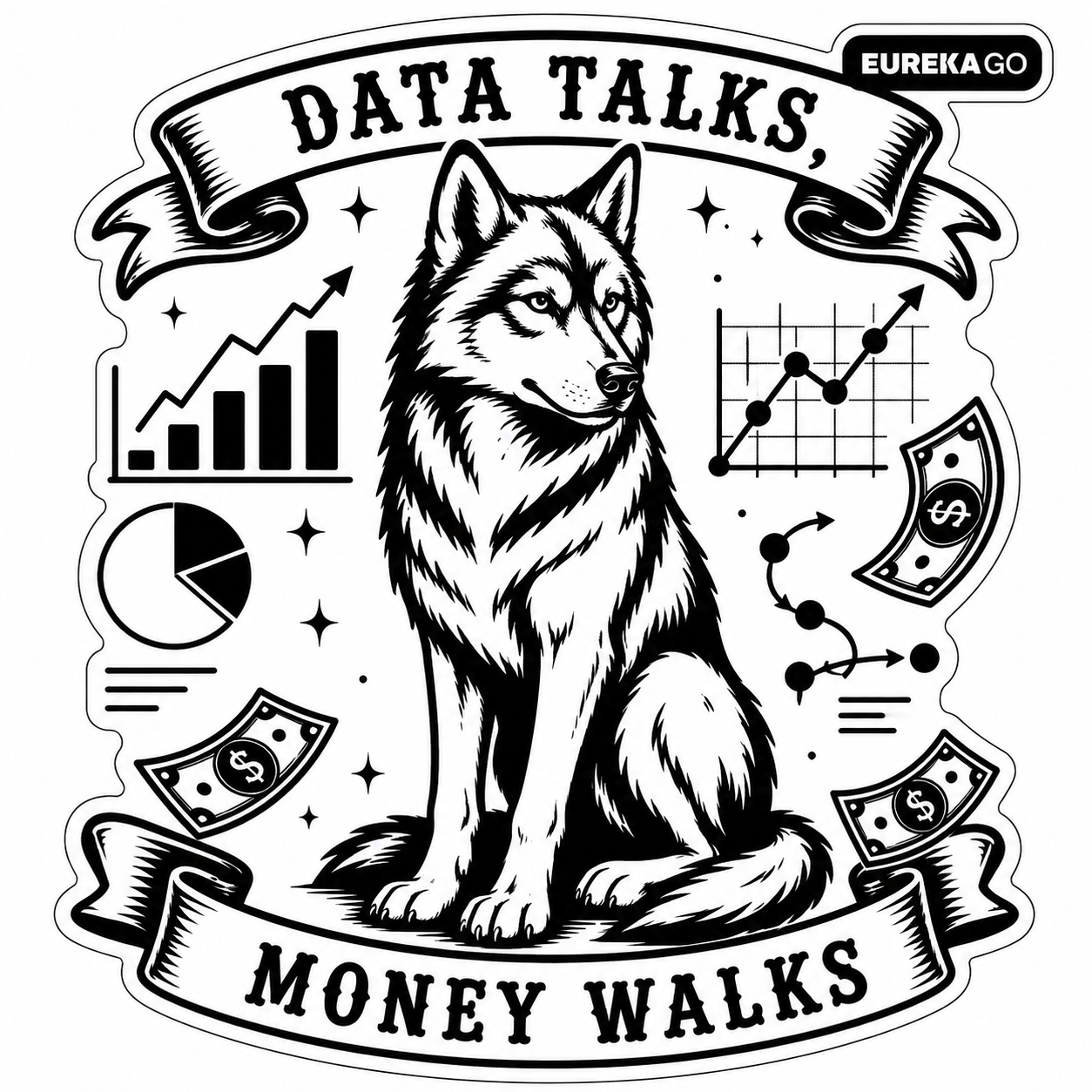
Market intelligence, strategic positioning, data-driven growth, business instinct, and operational sharpness. The Wolf has already processed the data — it is acting on it.
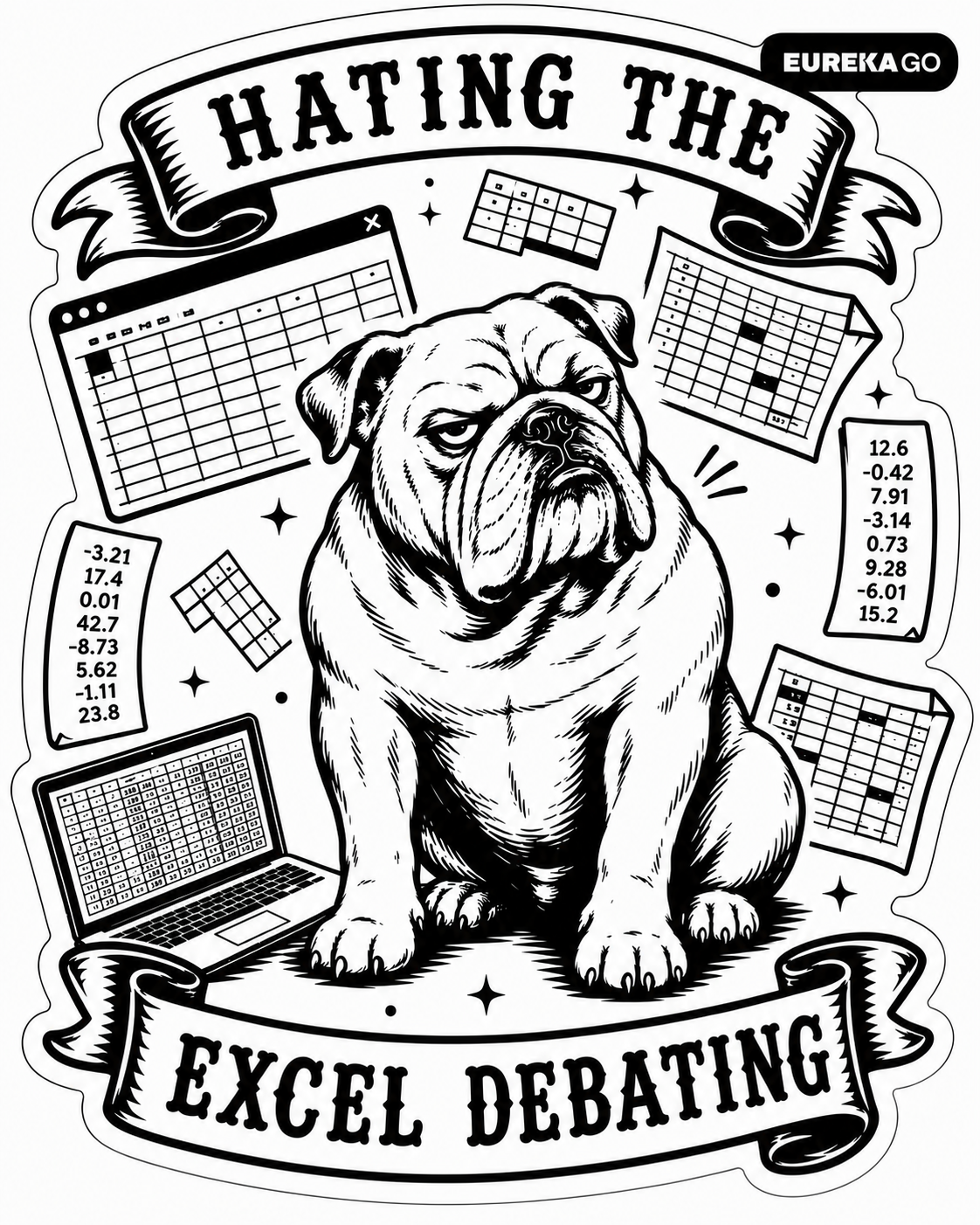
Resistance to change, operational inertia, attachment to manual workflows, and spreadsheet culture. The Bulldog is not wrong — it has seen systems come and go. It just refuses to move.
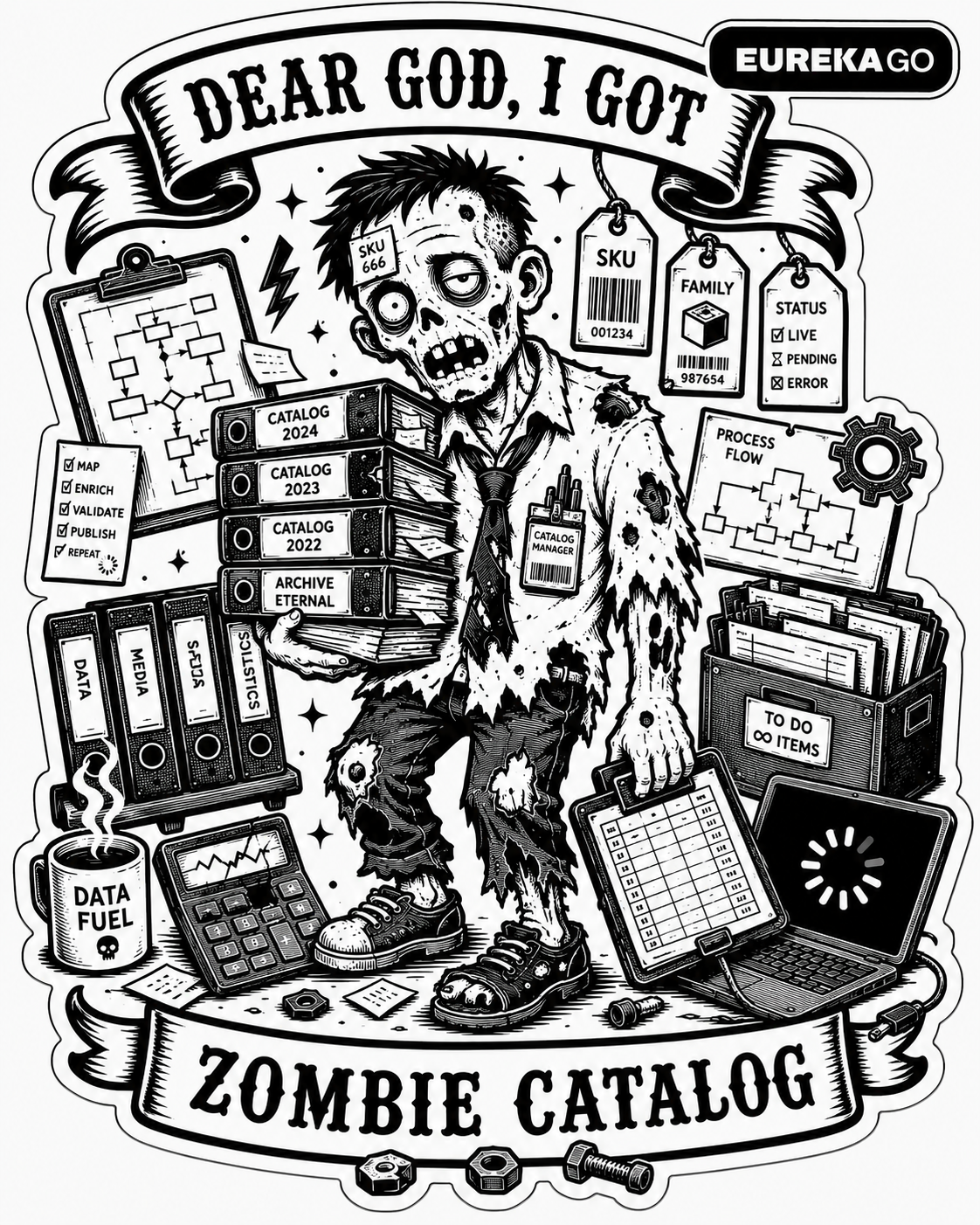
Outdated catalog systems, repetitive manual work, operational burnout, maintenance hell, and dead workflows that still run. The Zombie is not defeated — it is eternal. It will be there tomorrow doing the same thing.
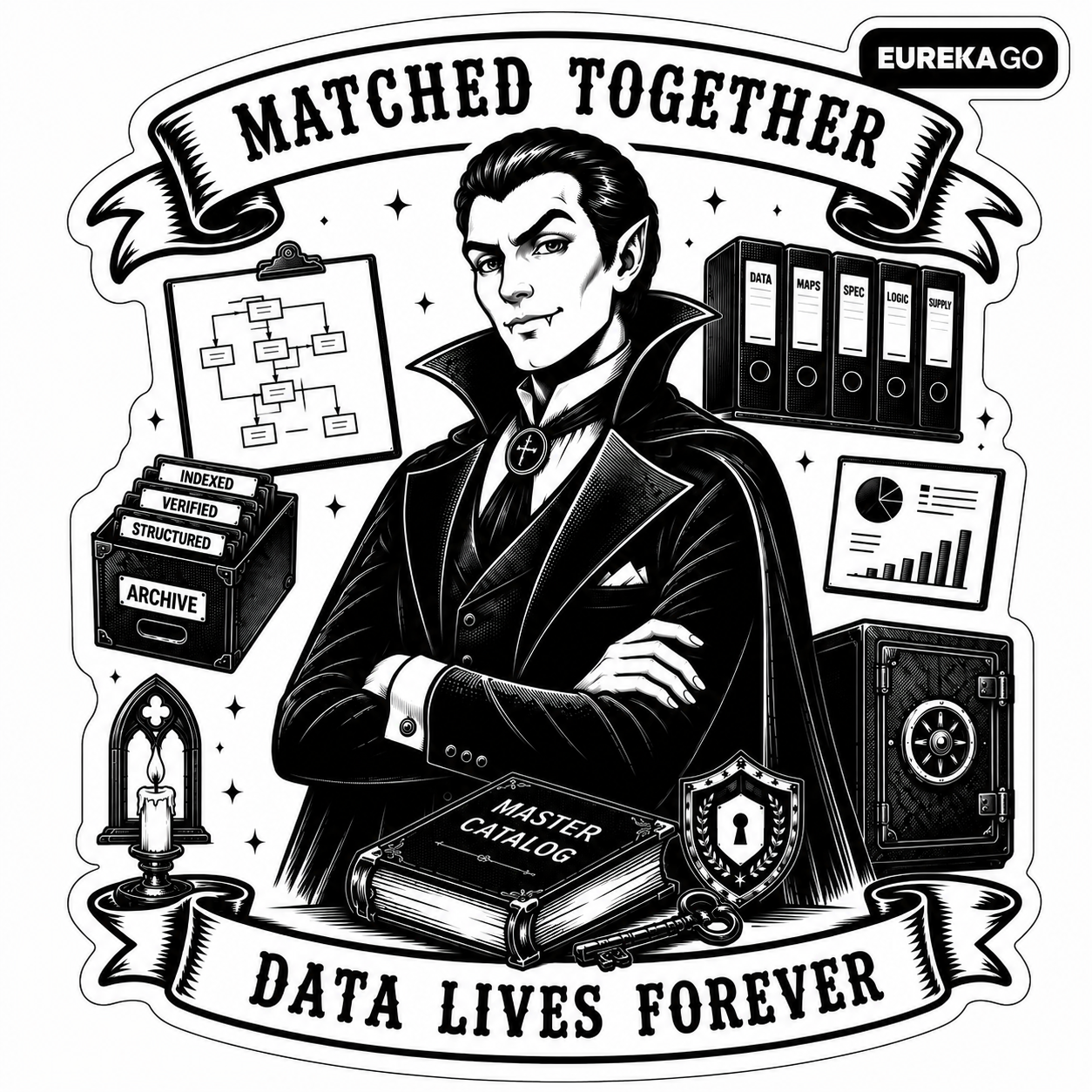
Governance, permanence, structured systems, canonical truth, source integrity, and eternal archives. The Vampire does not die. Neither does well-governed data.
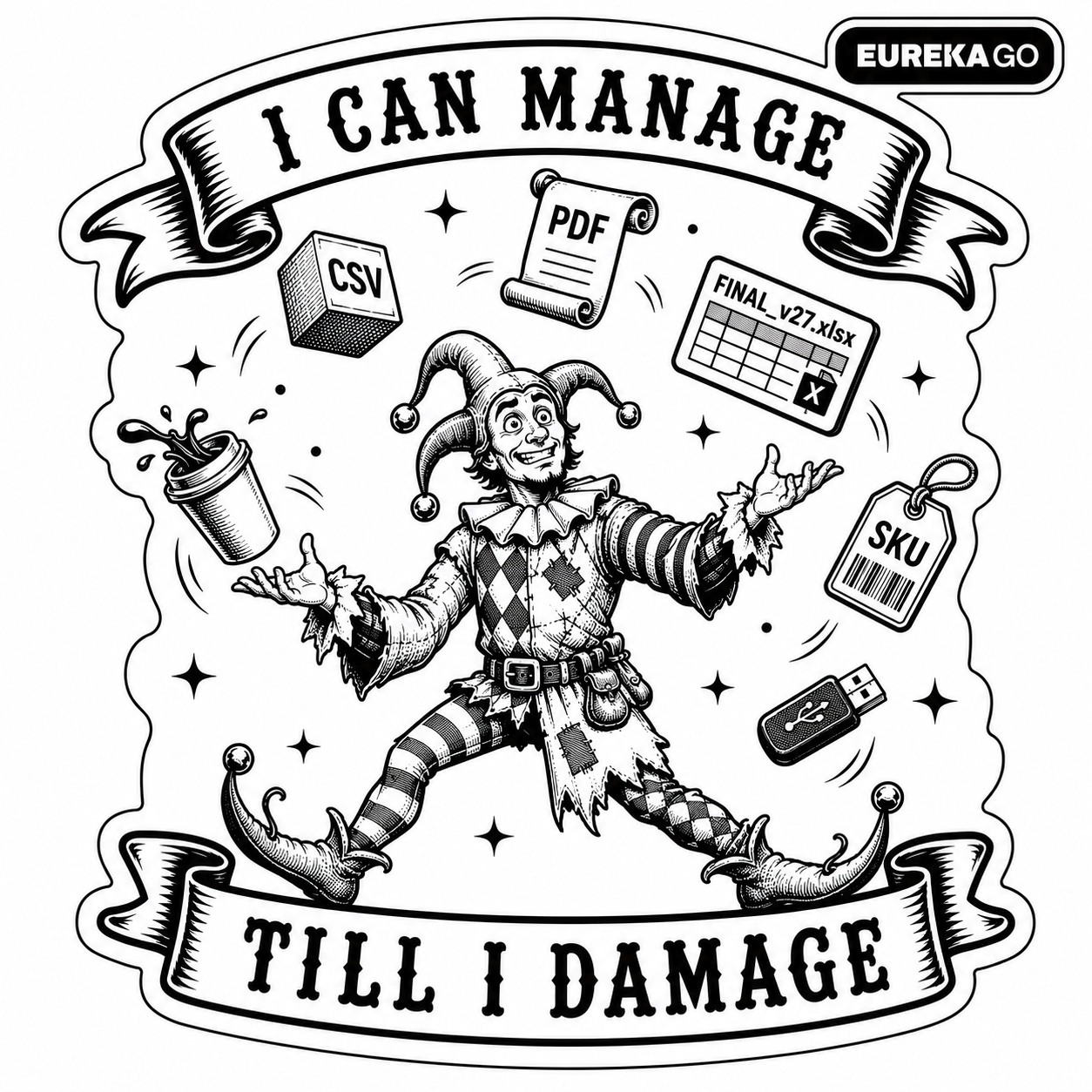
Workflow fragmentation, tool overload, disconnected systems, operational chaos, and orchestration failure. The Juggler is not stupid — the humor comes from impossible systemic complexity, not incompetence. A medieval court jester desperately applying 14th-century coordination skills to 21st-century data infrastructure.
The Juggler is the official EurekaGO 404 mascot. Scene: the Juggler desperately juggling CSV files, PDFs, SKU tags, spreadsheets, and folders — one object falls toward the viewer with "404". The entire balance is collapsing.
Use Poster Mode only — open, minimal, gesture-driven. Not sticker-heavy, not decorative. The silhouette and the single falling "404" object carry the scene.
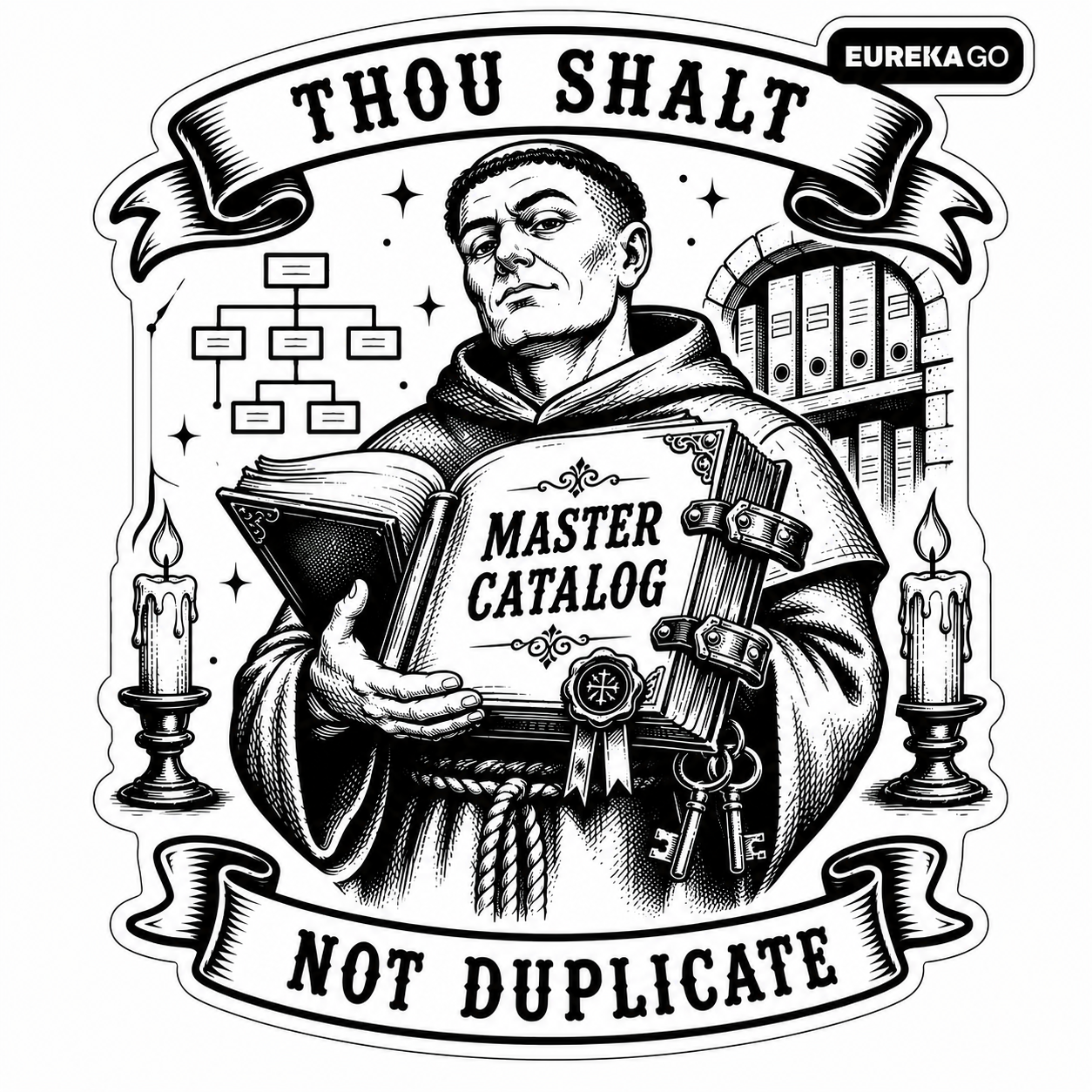
Governance, preservation, trusted systems, taxonomy purity, source attribution, and structured knowledge. The Monk has maintained the archive for centuries. It will maintain it for centuries more.
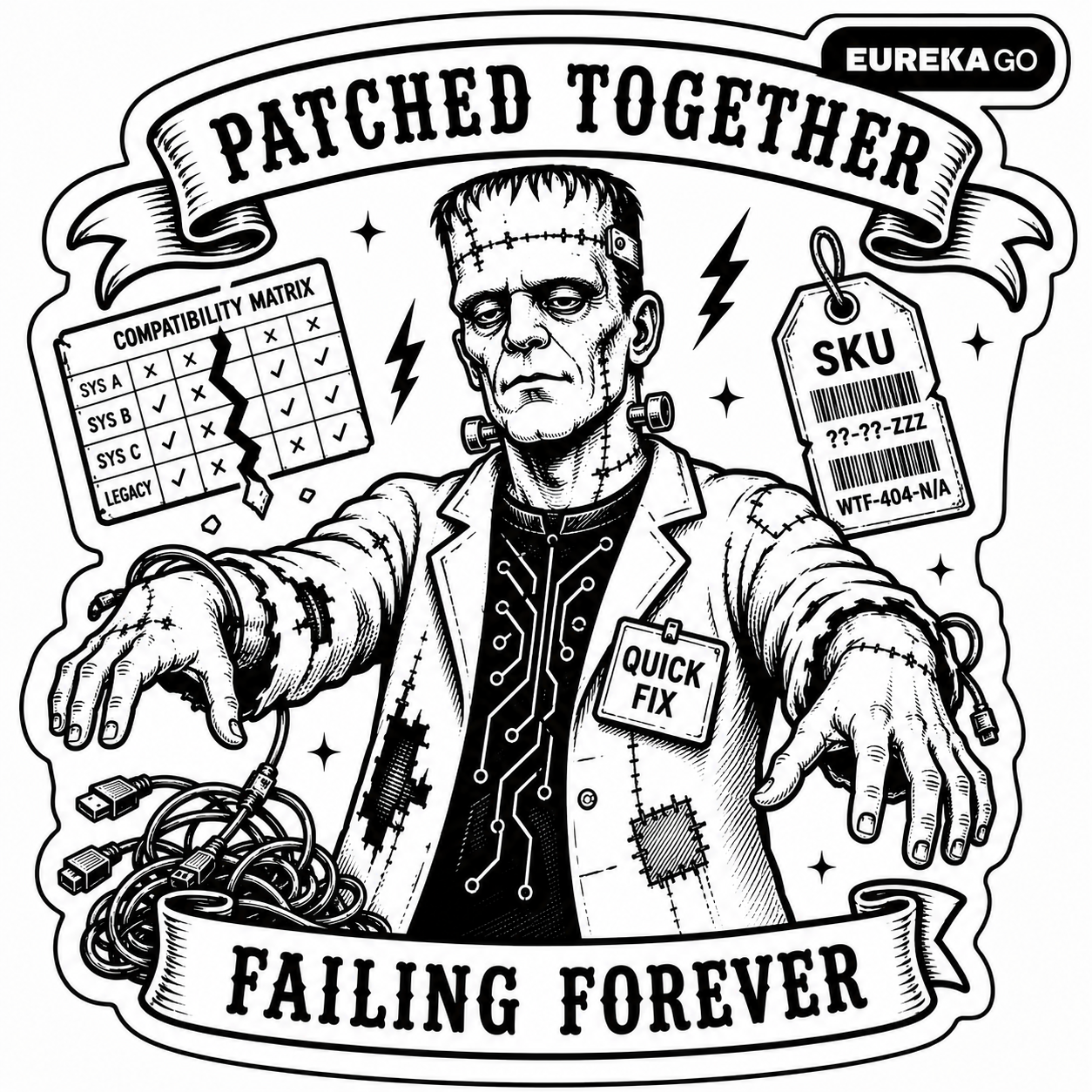
Reckless imports, uncontrolled integrations, taxonomy mutations, compatibility chaos, and architectural complexity. Frankenstein is brilliant — that is what makes it dangerous. Every "quick fix" creates a new monster.
The seven characters form two opposing teams. Every campaign, onboarding sequence, or brand story can be structured as a movement from the Chaos side to the Governance side — a journey the user has already made, or is about to make.
The Governance characters are always portrayed with composure. The Chaos characters with performative struggle. The contrast makes the value proposition visible without copy.
The Monk and the Vampire guard the single source. Frankenstein and the Zombie multiply versions uncontrollably. The visual gap tells the story.
The Chaos characters are always in crisis mode — improvising, reacting. The Governance characters are calm because the system is designed to last.